Tokyothèque Neighbourhoods: Volume 2
Tokyothèque Neighbourhoods: Volume 2
Couldn't load pickup availability
Pre-orders are now open. Shipping begins on 1 October 2026, with the earliest orders dispatched first. Every pre-order will be individually numbered and signed.
Receive complimentary shipping, two volumes per year and your name in the book with a City Walker subscription.
Tokyothèque Neighbourhoods returns for a second volume, accompanying you through Tokyo one neighbourhood at a time.
As more visitors follow the same itineraries circulated through social media, our guidebook offers a way to see the city on its own terms, without overwhelming either it or yourself.
Combining the precision of a design manual, the perspective of a cultural magazine and the curiosity of a travel journal, it belongs equally on the coffee table and in your hands as you walk through Tokyo.
This Volume’s Neighbourhoods
① Kōenji: a low-rise town where counterculture and everyday life coexist without seeming at odds. Underground music venues, vintage boutiques and street performers sit alongside produce stores, cosy kissaten and local life.
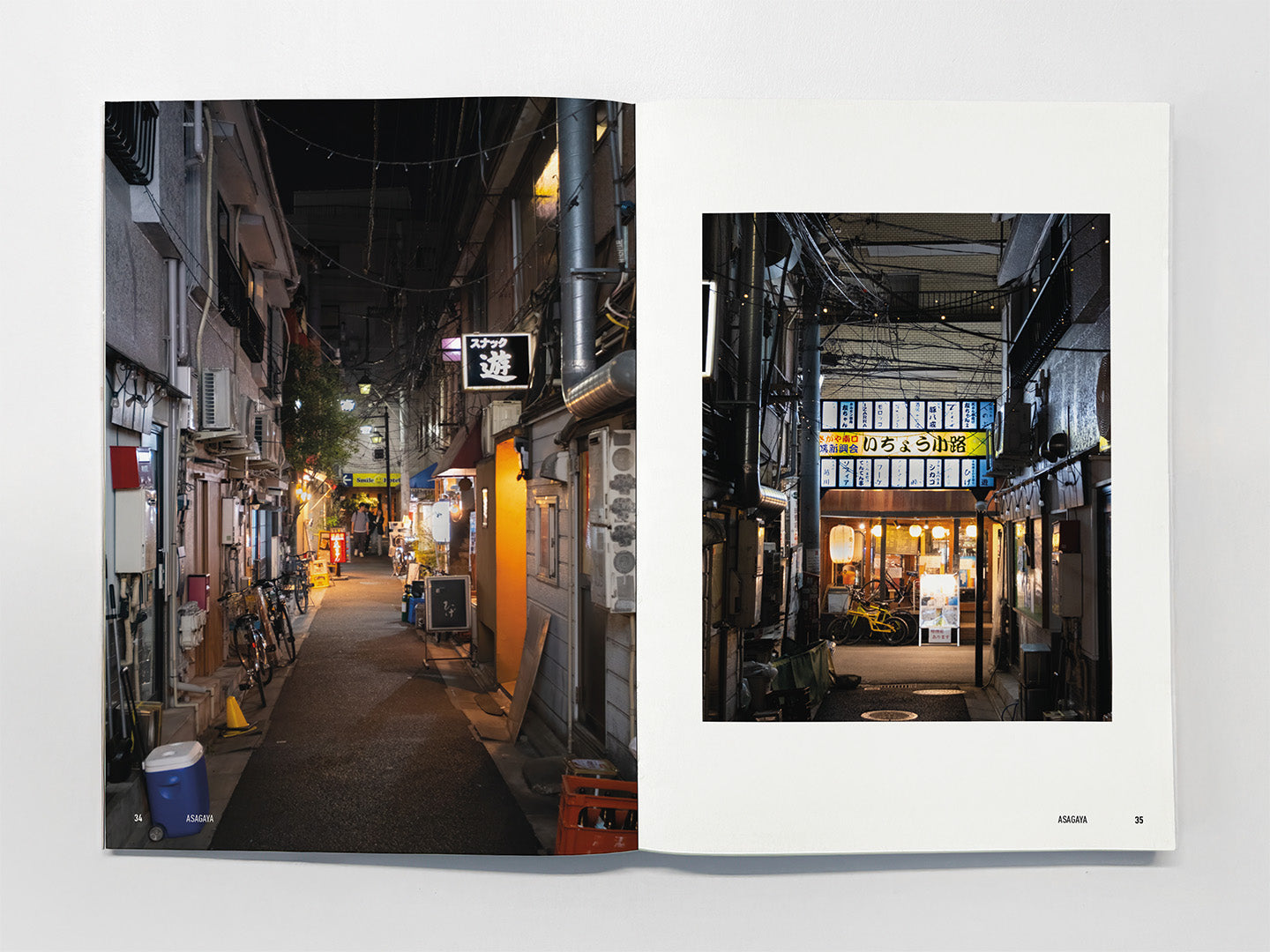
② Asagaya: a quieter neighbourhood of residential streets and atmospheric alleyways, with a long association with writers, filmmakers and musicians. Asagaya’s cultural character is more understated, expressed through small cinemas, jazz bars and intimate restaurants.
③ Kichijōji: lively shopping arcades give way to residential streets and wooded parkland. Often cited as one of Tokyo’s most desirable places to live, Kichijōji brings together metropolitan convenience, independent culture and access to nature.
These three neighbourhoods form a sequence along the west-central stretch of the Chūō Line. Each has a strong identity of its own, yet all belong to a broader corridor of low-rise neighbourhoods: refined but relaxed, residential yet culturally active. An entire trip could be spent exploring this section of the line, as we did while walking, photographing and mapping this edition.
Refinements for Volume Two
Drawing from feedback on volume one, we have made a series of practical refinements.
⨁ Lay-flat binding keeps every map detail visible and allows double-page photographs to be viewed in full.
⨁ Food photographs and concise notes from the places we ate and drank help you approach unfamiliar menus with greater confidence.
⨁ Opening hours for each listing have been verified wherever possible, reducing the chance of arriving to find somewhere closed.
⨁ More detailed maps now mark key street names, convenience stores, public facilities and places to rest along the way.
⨁ Editorial features, including conversations with local business owners, add the reading experience of a magazine without compromising the book’s function as a guide.
⨁ Layout tweaks to improve clarity, consistency and readability throughout.
These changes improve the book without altering the structure established in volume one. Once again, you can expect:
Rigorous Context
Before each walk, three layers of context help you understand the neighbourhood:
① Urban Form: how the neighbourhood fits into the city, including its terrain, built environment and transport connections.
② Historical Outline: the events, developments and social changes that have influenced the neighbourhood’s streets and character over time.
③ Everyday Culture: how people work, gather and express their tastes: the economies, social ties and creativity that give the area its atmosphere.
The right measure of context encourages more informed cultural engagement while leaving room for surprise, intuition and encounters of your own.
Comprehensive Route
With the context established, the route then provides a clear way around the neighbourhood without prescribing every moment of your time there. It is designed around three pillars:
① Streets: many guides focus on lists of places to visit. We pay equal attention to the streets connecting them, highlighting and explaining each yokochō, shōtengai and intriguing turning.
② Milestones: we’ve selected coffee shops, book and record stores, galleries, wayside shrines, sento bathhouses, quiet restaurants and lesser-known monuments. Together, they provide a structure for exploring the neighbourhood and a contemporary record of the area.
③ Map: the map brings streets and milestones together in a precise point-to-point walking route. The printed version keeps the route in hand and your attention on the neighbourhood, while a QR code opens the route digitally for smartphone navigation alongside your own pins.
You’ll come away with:
→ A working grasp of Tokyo’s geography and inner logic.
→ A more nuanced understanding of Japanese urban life and design.
→ A cultivated eye for details that usually go unnoticed.
→ Greater confidence in exploring on your own terms.
→ A method you can carry into future travels.
Walking Methodology
Alongside the neighbourhood guides, the book includes the latest version of our reference section on walking Tokyo, setting out our principles and practical approach to:
-
Time management
-
Energy levels
-
Disaster preparedness
-
Etiquette
-
Photography
-
Language
-
Dining
- Bathing
Print Specifications
- Production: Printed in Japan 🇯🇵
- Format: JIS B6 (128 × 182 mm)
- Binding: Lay-flat
- Cover: Softcover with dust jacket
- Paper: Lightly coated, finely grained stock
- Printing: Full colour throughout
- Pages: 228
- Bathing
If you’ve ever held a Japanese book crafted to this specification, you’ll know how naturally it sits in the hand and how easily it slips into a bag. JIS B6 has a distinctive balance: compact enough to carry throughout the day, but large enough for comfortable reading and full-page photography.
Digital Files
Included with every print edition or as a standalone eBook.
- EPUB file, tidily formatted
-
Separate PDF containing all maps
Even if travel is not imminent, volume two stands alone as a book to read and learn from, whether or not you own volume one.
We hope you’ll join us in creating a more sincere and considered way to travel and encounter culture.
Until we meet in Tokyo,
AJ & Kiara
Share